
The University of Haifa has launched a Home Again Campaign – a bold $60 million initiative focused on long-term recovery and resilience in Israel’s North, in the aftermath of Hezbollah attacks, the war in Gaza and Iranian ballistic missile strikes on Haifa and surrounding communities.
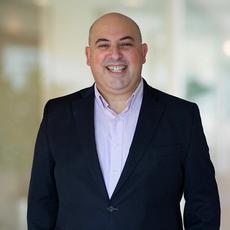
Ariel Karabelnicoff, National Executive Director of the Canadian Friends of University of Haifa points out the Home Again Campaign is focused on three pillars: Emotional and Physical Rehabilitation, Restoring Economic Stability, and Investing in the Future of the Community in northern Israel.
In order to deal with the severe shortage of doctors in northern Israel, the University of Haifa has opened a new school of medicine which will begin teaching 64 medical students this October and will in future train 200 medical students. As Ariel Karabelnicoff states “The University of Haifa understands that Israel will be a country where many young people will need physical and mental rehabilitation as a result of the war. There are thousands of people who have injuries, including those who have undergone limb amputations. The University 's new medical school requires funds for scholarships to trian worthy medical students and as well needs funds to build the necessary laboratories and related infrastructure for the new medical school. The task at hand is essential."

Karabelnicoff notes, “The invisible wounds of trauma are everywhere—PTSD among northern residents has jumped 33%, and is affecting kids, parents, and seniors.” As a result, the University has launched 24/7 hotlines, mobile therapeutic units, and is training responders through its nursing school."
Karabelnicoff adds “There are also plans to build a Community Rehabilitation and Research Center which will integrate clinical care and academic research in a way Israel hasn’t seen before.”
“There has been widespread displacement of residents, the collapse of basic public services, and immense trauma in the North,” Karabelnicoff says.
“Today, less than half of the 68,000 Israelis of the north who were displaced following Hezbollah’s attacks have returned home. Recovery means mental health support, economic renewal and a sense of belonging.”
Karabelnicoff indicates that “Unemployment in the North has spiked nearly 50%. We’re stepping in with workforce training for nurses, trauma specialists, educators, and environmental recovery professionals. And we’re offering programs for discharged soldiers to connect them to sustainable marine industries along the coast.” He stresses that for people of the North to return home their livelihoods must be restored. “Many lost their businesses during the extended call up of reservists for the war in Gaza since the Hamas Oct 7 attacks.

In order to sustain the North, the University is building trust and social cohesion through initiatives like legal aid clinics, AI-powered social services, and Jewish-Arab workplace integration. These are grassroots programs designed to rebuild civil society where it’s been deeply shaken,” Karabelnicoff indicates. The Frieze Family Foundation in Boston has made a US$5 million dollar commitment to helping the University of Haifa launch the Center for Shared Society—a hub dedicated to research, learning, and engagement initiatives that bring Jewish and Arab residents together. “It embodies the kind of partnership that Home Again depends on—one rooted in hope, social impact, and long-term commitment,” Karabelnicoff reports.
“What we are talking about is not just a relief effort – it’s a long-term resilience strategy for northern Israel. We’re grounding everything in real-time research, local partnerships, and community priorities. University of Haifa is uniquely positioned to lead this because we combine academic insight with on-the-ground action. This isn’t theory – it’s transformation.
“This is a campaign about hope-Tikvah. Every donor, every partner helps people return—not just to their homes, but to hope.”
Anyone wishing to contact Ariel Karabelnicoff to learn more about the Home Again Campaign or the Campaign for the University's Medical School may contact Ariel at 416-972-9400 (office), 647-282-1941 (mobile), or by email to
ariel.karabelnicoff@haifa-univ.ca
For more about University of Haifa go to: www.haifa-univ.ca