[The article below was published in the Feb 1,2026 print edition of the Pilipino Express]
Learning history has shown me the harm caused by telling only one side of a complex story. Without full context, narratives can deepen divisions, particularly when histories are contested and emotionally charged. To explain why this matters to me personally, I want to share my background.
I am of both First Nations and European descent. My birth family and maternal ancestors are from Animakee Wa Zhing #37 First Nation in Treaty 3 territory. Adopted by non-Indigenous parents, I did not reconnect with my birth family until my 30s. That reconnection marked the beginning of my journey into Indigenous identity, culture, and history—context that had been missing from my own story.
Around that same time, I also began forming meaningful relationships within the Jewish community. Through events, and cultural experiences, I noticed striking commonalities between our peoples: resilience expressed through humour and ceremony, deep respect for tradition, and enduring spiritual, cultural, and historical connections to land.
Following the Hamas attacks on Israel on October 7, 2023—when more Jewish people were murdered in one day than at any time since the Holocaust—the public environment became saturated with misinformation and escalating hate. Over these past two summers, I have helped remove and report antisemitic graffiti and posters across the city. These experiences have reinforced my commitment to highlighting our shared histories and fostering dialogue between Indigenous Canadians and Jewish peoples, with the aim of bringing people together “in a good way.”
One of the foundational themes in my presentations is indigeneity. First Nations, Métis, and Inuit peoples are indigenous to Turtle Island—North America—just as Jewish people are Indigenous to the land of Israel. Both maintain unbroken cultural, spiritual, and linguistic ties to their homelands, supported by archaeological, historical, and genetic evidence.
Recognizing Jewish indigeneity is essential to understanding why its inclusion matters in the context of the upcoming Canadian Museum for Human Rights (CMHR) exhibit, Palestine Uprooted: Nakba Past and Present. The exhibit states that it “explores the human rights violations related to the ongoing forced displacement and dispossession of Palestinians.” Palestinian stories are important, and their lived experiences deserve space to tell them, but it is the full historical context that also deserves space, which enables people to understand this complex and complicated history.
What I only recently learned myself is that November 30 marks the Day of Jewish Refugees, commemorating the expulsion of over 850,000 Jewish people from the Middle East and North Africa in the mid-20th century. During this same period, Jews were also forced from Jerusalem and cities they had inhabited for centuries.
A common response to calls for broader context is that the CMHR already has a Holocaust exhibit, as though that alone tells the story of Jewish history. The museum does indeed house a permanent Holocaust gallery, along with the powerful Dimensions in Testimony exhibit. These are vital educational tools documenting the violation of Jewish human rights in Europe from 1933 to 1945.
However, the Holocaust exhibit does not address the founding of the State of Israel in 1948, nor the displacement and persecution of Jewish communities across the Middle East, North Africa, and Jerusalem during that time. It does not confront persistent narratives that portray Jews as foreign colonizers with no historical ties to the land, or that frame Israel through an apartheid lens—despite the reality that Israel is home to approximately two million Arab citizens who participate fully in civic life.
Through my own journey, I have learned that presenting multiple perspectives does not diminish anyone’s lived experience. Rather, it deepens understanding, and creates pathways toward dialogue and reconciliation. For these reasons, there is ample justification to include Jewish displacement and human rights violations alongside Palestinian narratives. Including Jewish experiences does not negate Palestinian suffering; it strengthens historical integrity. This context is especially important given that Jewish people remain one of the most targeted groups for hate worldwide.
In the museum’s own supporting material for the Nakba exhibit, the article “Information Disorder in Times of Conflict” states: “The distortion of facts doesn’t just blur the truth—it shapes how the world sees a conflict, downplaying real suffering and making it easier to see others as ‘the enemy.’” We are already witnessing the consequences of such distortion within our own city, where hateful words and symbols have appeared not only in public spaces but on the walls of sacred sites within the Jewish community.
By presenting only one side of this history, there is a real risk of downplaying the impact of Jewish experience and trauma and shaping public perceptions in ways that lack essential context. By broadening the lens, the CMHR, an institution of national influence and stature, has the opportunity to model honest, inclusive, and courageous storytelling, while fulfilling its mandate to enhance understanding, promote respect, and encourage reflection and dialogue.
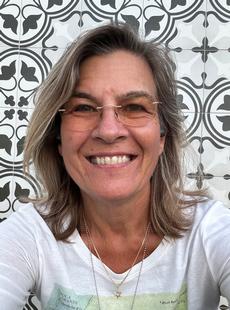
Lisa Lewis is a proud member of Animakee Wa Zhing #37 First Nation in Treaty 3, a community builder and advocate known for building meaningful bridges between people and groups. She is the owner of Beyond Excellence Creative Consulting and a recent recipient of the King Charles III Coronation Medal. Through her work, presentations, and storytelling, Lisa is committed to truth, reconciliation, and creating dialogue where all voices are heard.