But another Ukrainian group and Polish Canadian Congress favour release of names
In October 2023, Dr. Catherine Chatterley, the Founding Director of the Canadian Institute for the Study of Antisemitism (CISA), took the initiative to organize a petition signed by over 70 leading international scholars asking the Government of Canada to release all documentation related to Nazi war criminals in Canada. The petition was sent to Libraries and Archives Canada (the petition can be viewed at the end of this article), which has been consulting on releasing Part 2 of the 1986 Commission of Inquiry on War Criminals in Canada led by retired Superior Court of Quebec judge Jules Deschênes, which has been kept secret until now. The consultation currently taking place is in response to access to information requests lodged by The Globe and Mail and two other organizations.
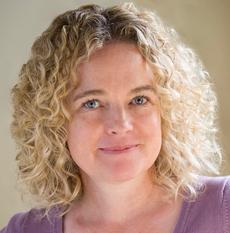
Dr. Chatterley, a respected historian and editor of Antisemitism Studies, is hopeful that the Government of Canada will finally release the up until now suppressed documentation.
As Chatterley explains, “It is crucial for scholars to accurately assess this important period of history and to examine and explain the truth about Nazi war criminals living in Canada after World War II. To do this, we need open access to all of the documentation on the subject, which includes: 1) part II of the Deschênes Commission Report, addressing individual cases; 2) Alti Rodal’s report to the Deschênes Commission, titled "Nazi War Criminals in Canada: The Historical and Policy Setting from the 1940s to the Present” (without deletions); 3) the hundreds of Nazi war crimes files originally held by the Department of Justice and Royal Canadian Mounted Police; and, 4) all files related to Nazi war crimes and criminals held by Library and Archives Canada. The Canadian government must release all documentation related to Nazi war criminals in Canada in full and completely unredacted form with no deletions.”
As Chatterley states, "The public and scholars deserve to know the truth about Canada’s history and that extends from residential schools to Nazi war criminals to the treatment of gay and lesbian Canadians to the experiences of refugees and immigrants, and so on. The question is not why all the files related to Nazi war criminals in Canada should be released in 2024, but why not? Who exactly is being protected here and why?”
She concludes, “It’s pretty clear that after so many years the right thing to do is for the Government of Canada to release all documentation related to Nazi war criminals without further delay and operate with complete transparency.”
However, as reported in The Globe and Mail, the Ukrainian Canadian Congress appears to be preparing to mount a legal challenge in the Federal Court of Appeal “in the event the Government of Canada releases the supressed documentation, ignoring Justice Deschênes’ ruling on confidentiality.” They fear that families of the alleged war criminals will be subject to public scorn.
However, the Association of United Ukrainian Canadians (AUUC) has issued a press release indicating it was not consulted by Library and Archives Canada, and had it been, it would have unequivocally supported the release of the names of alleged war criminals in Canada. Furthermore, the AUUC does not support any legal action to keep the names suppressed.
When asked by the Winnipeg Jewish Review if she was concerned that releasing the names of alleged war criminals in Canada will bring public scorn on their families and descendants, Chatterley responds, “In all honesty, I do not believe that there will be a “witch hunt” for family members of people listed in the second part of the Deschênes Commission Report. Who could possibly blame Canadian family members today for the alleged actions of their relatives in Europe 80 years ago? I think this argument is a non-starter in today’s Canada.”
The Canadian Polish Congress has expressed strong support for the release of the names of members of the Ukrainian Waffen SS Galizien division who fled to Canada after the Second World War, but they were not in fact consulted by Libraries and Archives Canada on the matter.
“Many members of our community are descendants of victims and survivors of Nazi atrocities, including those perpetrated by SS Galizien,” John Tomczak, president of the Canadian Polish Congress, has written recently in a letter to Leslie Weir, Librarian and Archivist of Canada. “The Canadian Polish Congress believes that the greater risk lies in secrecy and omission. The Polish-Canadian community feels that any reluctance to release these names may only deepen existing wounds.”
Tomczak wrote that Canada must confront the truth of its history regarding Nazi war criminals, and “we can hope to bring a sense of justice and closure to the many families and communities who continue to grapple with the horrors of that period.”
Tomczak also noted that “the Polish community has a deep and personal connection to these historical events. Many members of our community are descendants of victims and survivors of Nazi atrocities, including those perpetrated by SS Galizien, including veterans and combatants that fought alongside Canada, Great Britain and other allies to defeat Nazi tyranny in Europe.”
Grzegorz Rossolinski-Liebe, a German-Polish historian at the Freie Universität Berlin, a signatory of the petition coordinated by Chatterley, told The Globe and Mail that, “Canada took in after the war Waffen SS Galizien veterans and other Ukrainians who served in the German service in the Holocaust.”
Sir Richard Evans, former Regius professor of history at Cambridge University and author of 18 books, including Hitler’s People, told The Globe “it is very important both to the basic principles of justice and the interests of historical research that Part II of the report without suppression or redaction and including a complete list of the names of SS veterans, many of whom may well have been guilty of war crimes and atrocities, be released for general public consumption without delay.”
It is very problematic that Libraries and Archives Canada did not consult with Holocaust survivors or Holocaust scholars who have advocated for the complete release of the list of alleged Nazi war criminals. As Chatterley notes, "This sounds like a very biased and flawed process that favours the position of some Ukrainian Canadians. How could they have excluded Holocaust survivors, and scholars of this period of history as well as Polish Canadians and the variety of voices in the Ukrainian Canadian community?"
In 1998, The United States Congress passed the Nazi War Crimes Disclosure Act, which created an interagency working group to examine the release of records that cast light on Nazi war crimes and war crimes. As a result, 8,000,000 pages of U.S. government records were declassified and are now available at the U.S. National Archives.
“The clear weight of scholarly opinion is in favour of releasing the secret documents without further delay,” Chatterley concludes.
* * * * * *
October 12, 2023
Petition to the Government of Canada:
As scholars of World War II, European history, and Canadian history, we ask the Canadian government to release all documentation related to Nazi war criminals in Canada in full and completely unredacted form, including: 1) Part II of the Deschênes Commission report, addressing individual cases; 2) Alti Rodal’s report to the Deschênes Commission, titled "Nazi War Criminals in Canada: The Historical and Policy Setting from the 1940s to the Present” (without deletions); 3) the hundreds of Nazi war crimes files originally held by the Department of Jutis/ce and Royal Canadian Mounted Police; and, 4) all files related to Nazi war crimes and criminals held by Library and Archives Canada.
To accurately assess this important period of history and to examine and explain the truth about Nazi war criminals living in Canada after World War II, scholars need access to all of the documentation on the subject.
Professor Sir Richard Evans
University of Cambridge, Faculty of History
Richard Breitman
Distinguished Professor Emeritus, American University
Yehuda Bauer
Professor, Hebrew University, Yad Vashem
Johann Chapoutot
Professor of Modern History, Sorbonne Université, Paris
Thomas Kaufmann
Prof. Dr. Dr. h.c. Dr. h.c., FBA
University of Göttingen, Faculty of Theology
Thomas Weber
Professor of History and International Affairs, University of Aberdeen
Visiting Fellow, Hoover Institution, Stanford University
Per Anders Rudling
Associate Professor, Wallenberg Academy Fellow, Lund University, Sweden
Dr. Grzegorz Rossolinski-Liebe
Freie Universität Berlin
Dr. Kyle Makhews
Executive Director, Montreal Institute for Genocide and Human Rights Studies, Concordia University
John-Paul Himka
Professor Emeritus, University of Alberta
Delphine Bechtel
Professor of German, Yiddish, and Central European Studies, Sorbonne Université, Paris
Martin Kitchen
Professor of History, Simon Fraser University
John Pawlikowski
Professor Emeritus of Social Ethics, Catholic Theological Union Chicago
Hillel Kieval
Professor Emeritus of Jewish History and Thought, Washington University in St. Louis
Richard Wolin
Distinguished Professor of History, CUNY Graduate Center
Dr. Mar/n Dean
Babyn Yar Holocaust Memorial Center
Alvin H. Rosenfeld
Irving M. Glazer Chair in Jewish Studies, Borns Jewish Studies Program
Director, Institute for the Study of Contemporary Antisemitism, Indiana University
Jarrek Carty
Principal and Professor, Liberal Arts College, Concordia University
Sergio DellaPergola
Professor Emeritus and former Chairman of the Hebrew University’s Harman Institute of Contemporary Jewry, The Hebrew University of Jerusalem
Norman J. W. Goda
Norman and Irma Braman Professor of Holocaust Studies, University of Florida
Frank Chalk
Emeritus Professor of History, Montreal Institute for Genocide & Human Rights Studies and Department of History, Concordia University
Jared McBride
Assistant Professor, University of California-Los Angeles
Jonathan Sarna
University Professor and Joseph H. & Belle R. Braun Professor of American Jewish History
Brandeis University
Jan Grabowski
Professor, Department of History, University of Okawa
Susannah Heschel
Eli M. Black Distinguished Professor, Dartmouth College
Ira Robinson
Distinguished Professor Emeritus, Concordia University
David Matas
Human Rights Lawyer, Senior Honorary Counsel to B'nai Brith Canada
Legal Representative for the Commission of Inquiry on War Criminals
Marion Kaplan
Professor of Modern Jewish History, Emerita, New York University
Mary Nolan
Professor of History Emerita, New York University
Philip Spencer
Emeritus Professor in Holocaust and Genocide Studies, Kingston University
Jean Cahan
Emeritus Senior Lecturer in Philosophy, University of Nebraska-Lincoln
Phyllis Chesler
Emerita Professor of Psychology, College of Staten Island, City University of New York
Jeffrey Herf
Distinguished University Professor, Emeritus,
Department of History University of Maryland, College Park
Bryan Cheyeke
Professor, University of Reading
Sara Lipton
Professor and Chair of History, Stony Brook University
Dan Michman
Emeritus Professor, Bar Ilan University
David Meola
Fanny & Bert Meisler Associate Professor of History
Jewish Studies & Visiting Associate Professor, University of South Alabama
Wolfram Stender
Prof. Dr., Sociology, Hochschule Hannover, Germany
Armin Lange
Univ.-Prof. Dr. Mag.
University of Vienna, Institute for Jewish Studies
Hubertus Buchstein
Prof. Dr., Full Professor for Political Theory and the History of Political Ideas
Greifswald University, Germany
Ruth Panofsky
Professor, Toronto Metropolitan University
Laszlo Borhi
Peter A. Kadas Associate Professor
Hamilton-Lugar School of Global and International Studies, Indiana University-Bloomington
Gunther Jikeli
Associate Professor, Indiana University
Gil Ribak
Associate Professor of Judaic Studies, University of Arizona
Dr. Marija Krupoves-Berg
Independent Scholar, Indiana, USA
Diana Dumitru
Ion Ratiu Visiting Professor, Chair of Romanian Studies, Georgetown University
Dr. Makhew Kok
Researcher, IRES, Uppsala University, Sweden
Robert Brym
Professor, Department of Sociology and Centre for Jewish Studies, University of Toronto
Dr. Carolyn Sanzenbacher
Honorary Fellow, Parkes Institute for the Study of Jewish/Non-Jewish Relations
University of Southampton
Dr. Catherine Chatterley
Canadian Institute for the Study of Antisemitism
Konstantin Minoski
Full Professor in Sociology, Cyril & Methodius University in Skopje
Dr. David Barnouw
Independent WWII historian
Fernando Orlandi
President, Biblioteca Archivio del CSSEO
Dr. Makhias Küntzel
Independent Scholar, Hamburg, Germany
Arno Tausch
Visiting Professor of Political Studies and Governance, University of the Free State, Bloemfontein, South Africa
Adjunct Professor of Political Science at Innsbruck University, Austria
Joanna Michlic
Visiting Professor of Holocaust and Contemporary History, Lund University, Sweden
Dr. Darren O'Brien
Honorary Senior Research Fellow; Chair, School of Historical and Philosophical Inquiry
University of Queensland, Australian Institute for Holocaust and Genocide Studies
Milton Shain
Emeritus Professor of Historical Studies, University of Cape Town
Dr. Frank Domurad
Independent Scholar, Germany
Chad Goldberg
Martindale-Bascom Professor of Sociology, University of Wisconsin-Madison
Anika Walke
Georgie W. Lewis Career Development Professor and Associate Professor of History
Washington University in St. Louis (USA)
Dr. Balazs Berkovits
Comper Center, University of Haifa
Yossi Ben Artzi
Professor, University of Haifa
Dr. Marcus Funck
Zentrum für Antisemitismusforschung, TU Berlin
Dr. Seymour Adler
Adjunct Professor, Hofstra University
Dr. Efraim Zuroff
Coordinator Simon Wiesenthal Center Nazi War Crimes Research, Simon Wiesenthal Center
Sylvie Honigman
Professor, Tel Aviv University
Deborah Schnitzer
Professor of English Emerita and National 3M Teaching Fellow, University of Winnipeg
Ion Popa
Gerda Henkel Stiftung Scholar, University of Manchester, Centre for Jewish Studies
Meir Litvak
Professor and Director, Alliance Center for Iranian Studies, Tel Aviv University
Marco Carynnyk
Research Associate, University of Toronto
Jeffrey Burds
Associate Professor of History, Northeastern University, Boston
Mark Gould
Professor, Haverford College
James Wald
Associate Professor of History, Hampshire College
Lionel Steiman
Senior Scholar and Professor of History, University of Manitoba
Frederick Krantz
Professor of History and Founding Principal of the Liberal Arts College, Concordia University Director, Canadian Institute for Jewish Research
Dr. Marine Cohen
Sociologist, Le Centre national de la recherche scientifique (France)