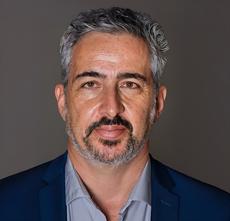
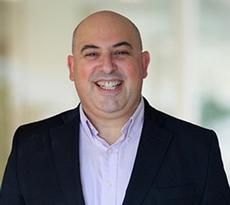
Can AI be a source of hate, and can it counter hate-speech? These interesting questions and others will be examined at an event sponsored by the Canadian Friends of Haifa University and Congregation Etz Chayim featuring a talk by Dr. David Barak Gorodetsky, on Sunday Sept 22, 2024 at 7:30 p.m. at Etz Chayim Synagogue at 1155 Wilkes. Ariel Karabelnicoff, the executive director of Canadian Friends of Haifa University will have a fireside chat with Gorodetsky at the event titled, “Antisemitism Unplugged: Can AI Combat Hate”. There is no cost to this event which will look at innovative ways of combatting antisemitism, but registration is required. To register go to:
Gorodetsky, who is the director of the Elizabeth and Tony Comper Centre for the Study of Contemporary Antisemitism and Racism at Haifa University told the Winnipeg Jewish Review that “AI itself can be a source of hate. AI systems train on data created by humans, and since that data contains hate and bias, AI systems can potentially reproduce them. Henry Kissinger, who got deeply interested in AI well into his 90s, noted that. ‘AI’s brittleness is a reflection of the shallowness of what it learns.’
Gorodetsky further points out that ‘One way AI systems present their bias is in jokes” An example of this is the joke, “Why don’t Jewish people play hide and seek? Because nobody will look for them!”. This joke is antisemitic. (Gorodetsky has written about antisemitic bias in jokes in an article in the Jerusalem Post which can be found at https://www.jpost.com/opinion/article-795654 ) There is also bias in AI generated images.
”There are two ways to overcome this form of bias. One is to clean up the data in advance, which isn’t practical because there is so much of it, and the other is to install “guardrails”, which check the results of AI processing. The kind of bias displayed by AI towards Jews would not be acceptable with other minority groups, so the questions is, why aren’t there sufficient guardrails in place for the Antisemitism,?” Gorodetsky says.
Gorodetsky, who also leads the Ruderman Program for American-Jewish Studies at Haifa University adds, “AI can be used to combat hate. As he explains, “It is not very difficult to detect explicit antisemitism online, like “Hitler was right” or blatant anti-Jewish tropes. The challenge is with detecting the more subtle forms, such as “dog whistles”, which are essentially symbols that can only be interpreted by those who know their meaning. For instance, using the symbol 109/110 means “there were 109 countries that expelled the Jews, make it 110”. But also references to “global elites” are often an antisemitic trope.”
He adds, “To overcome this challenge, and this is where AI comes into play, you need technologies that understand the context in which things are said, against the backdrop of existing patterns of antisemitic speech and dog-whistling symbols, while also being able to learn and detect new symbols. These technologies can also eventually deepen our understanding of how antisemitism works in the world, especially online. One question we want to ask, for example, is does the speed of transmission on social networks, further accentuate the “conspiracy theory” aspect of antisemitism.”
Gorodetsky is of the view that in the future AI will be used increasingly against antisemitism. One of the things he is working on is a way to create counter-speech” to antisemitic content online. ‘The counter-speech is not directed towards the producers of the content, but towards those that were exposed to it, while assessing the best way to respond, in terms of content, tone etc. It might eventually become a technology-vs-technology kind of game – bots creating antisemitic contents, and bots creating counter-speech.”
Gorodetsky notes that after Oct 7, ways to combat antisemitism has become his main focus.
‘I was assigned to lead the Comper Center for the Study of Antisemitism and Racism at the University of Haifa in mid- 2023, as part of a larger portfolio, but after October 7, it became my main field of work. The eruption of unprecedented levels of antisemitism online, the challenges of antisemitism in academia, and the conflation of antisemitism and antizionism have become the central problem of the Jewish world, and we need to step up and address it.”
Dr. Gorodetsky is a historian specializing in American Judaism and the State of Israel. His research interests encompass Jewish-American history and religious thought, Israel-American Jewry relations, religion and politics, and the intersection of antisemitism, technology, and AI.
`
Born and raised in Israel, David was previously a technology expert in the Israeli Air Force and a vice president at an Israeli start-up company in New York. He was ordained by Hebrew Union College in Jerusalem in 2019 and served as a congregational rabbi at the Ramat Hanegev Regional Council. In recent years, he has been a visiting scholar at the University of Chicago Divinity School and a research fellow at the Shalom Hartman Institute of North America. A frequent contributor to various media outlets, David is also an acknowledged public speaker. He lives with his wife and two sons in a mixed Ultra-Orthodox community in the Jezreal Valley
The Center for the Study of Antisemitism and Racism at the University of Haifa , of which Gorodetsky leads, is dedicated to the research, teaching and promotion of public awareness regarding contemporary forms of antisemitism. The Center’s research is dedicated to contemporary global antisemitism covering the post- Holocaust to present day, focusing on the more subtle and complicated form of new antisemitism. Specifically, it analyzes antisemitism in relation to the State of Israel, Soviet antisemitism and contemporary parallels; the current discourse on privilege, power and identity politics, and the schools.
The Comper Center also aims to train and teach scholars and students about contemporary forms of antisemitism. It supports two courses on Antisemitism to be taught in the University of Haifa Israel Studies international program. In the longer term, it is hoped to develop a full academic track for antisemitism studies with the Israel Department’s MA offering. This will make Haifa University only the second university in the world to offer an MA program in antisemitism studies.
There is a need for robust public policy to guide such government action to address antisemitism. The Center is uniquely placed to take a lead not only in academic research but in public policy as well – specifically in areas where public policy has not been developed relative to antisemitism.
If you would like to make a donation to Canadian Friends of Haifa University,please go the homepage of the organization at https://haifa-univ.ca/? and click on the Donate button at the top of the right hand corner.